


Irish Culture
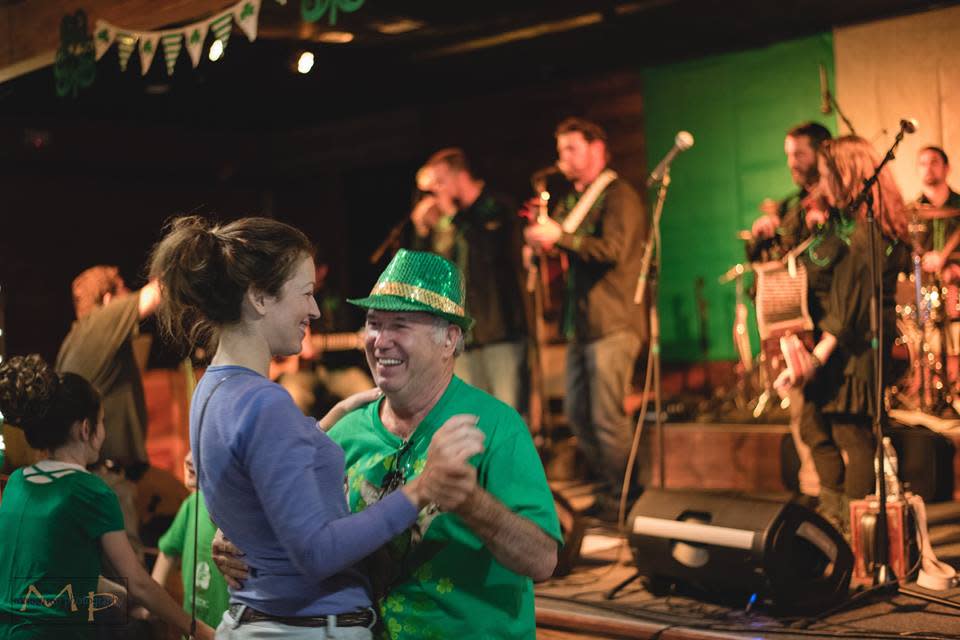
Over 350,000 Louisianians, or about seven percent of the state’s population, claim Irish ancestry, making them the second-largest European ethnic group—following those of French and French-Canadian ancestry—in the state.
The first Irish immigrants to Louisiana, mostly middle-class individuals and families fleeing political persecution, arrived during the Spanish colonial period. The majority stayed in New Orleans, where they integrated into Creole families while keeping their own cultural traditions. In 1806, the state’s first St. Patrick’s Day celebration was held in the city. A dozen years later, a group of Irishmen formed a local Hibernian Society.
A second, significantly larger, influx of Irish arrived at the port of New Orleans from the 1820s to 1850s. Fleeing economic and agricultural crises, this second wave numbered upwards of 425,000. Though many remained in the Crescent City, where by 1850 one in five residents were Irish, some of these immigrants gradually spread across the region. A sizable community ended up in western Acadiana, most notably Calcasieu Parish, working as farmers specializing in what was marketed a century later as "Irish potatoes.”
The story of the 19th-century Irish-American immigration is well documented. Less is known about the cross-cultural connections that arose a century earlier, in the Canadian Maritime Provinces. There, Gaelic-speaking Scotch-Irish lived, and no doubt assimilated, among the soon-to-be-exiled Acadian population that eventually established a homeland in southwest Louisiana. Scholars posit that the prominence of the fiddle in Cajun music owes a debt, however small, to the lively reels and jigs at the center of Irish folk music.
Each March, several pub-centric St. Patrick’s Day celebrations pop up around Acadiana. Downtown Lafayette hosts two festivals, Patty in the Park, featuring a not-necessarily-Irish musical lineup, and the two-day Celtic Bayou Festival.
Founded in 2016 by Sheila and Tony Davoren, who met and fell in love as touring Riverdance performers, Celtic Bayou Festival bills itself as “Authentically Irish,” a welcome alternative to stereotypical, watered-down St. Patrick’s Day observances. Festivities include music and dancing from across the Celtic diaspora (that includes Ireland, Scotland, Wales, Cornwall, the Isle of Man, the Breton region of northwest France, and Galicia, Spain), traditional foods, Irish whiskey tastings, and, of course, Guinness on tap.


Kelli Jones
For singer, songwriter, and multi-instrumentalist Kelli Jones, music has always been part of everyday life. Growing up in North Carolina, she spent her childhood surrounded by…

Mexican Restaurants in Lafayette
Lafayette runs on rice, flavor, and big tables to gather around, so it makes sense that Mexican restaurants have felt at home here for generations. Long-running favorites share the…

November Events Spotlight
If you're looking to spend some time in the Hub City and want to know what events are happening, you're in the right place. We'll give you a weekly rundown of live…

Corey Ledet
For Corey Ledet, becoming a musician started with a discovery close to home. He found his grandfather’s drum set and began hearing stories about the musician who had played…


