


Creole Culture
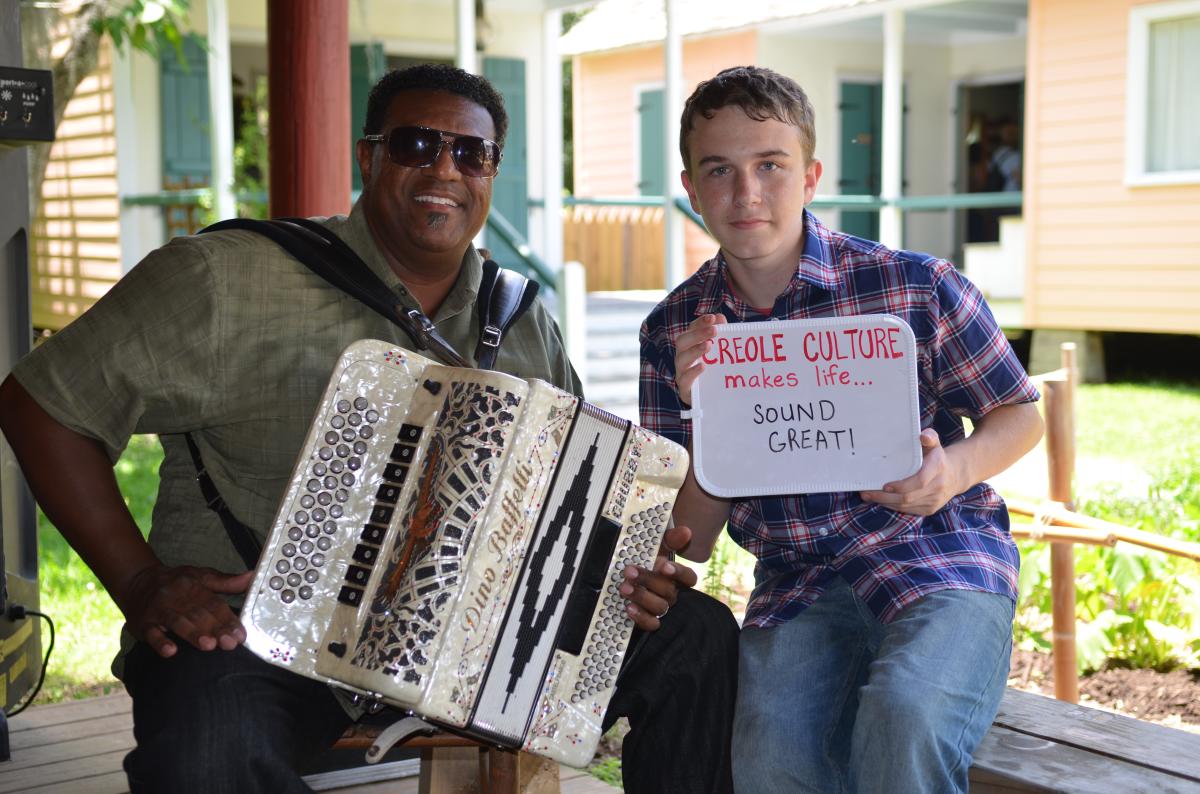
Creole is synonymous with South Louisiana, where people, commercial products, and the very land itself have long been described as just that: Creole.
The term derives from the French créole, the Portuguese crioulo, and, further up the linguistic family tree, the Latin creare, meaning to produce or create.
As an identity marker, Creole has been associated with Louisiana since the early decades of French, and later Spanish, colonial settlement, when it began popping up in sacramental records of individuals born in the state: white, Black, and mixed-race. Creole people were, in the broadest sense, native born in the New World with genealogical roots stretching across the Atlantic. After the Louisiana Purchase, as Anglo-American and European immigrants began asserting demographic, political, and cultural power in the state, a Creole identity became a point of pride, a marker of status, and a way to commodify people.
Descendants of French and Spanish colonists referred to themselves as Creole (as did some Germans whose ancestors arrived in the 18th century). A large community of Creoles of color exerted control over a vibrant economic, artistic, and political sphere of influence, especially in New Orleans. And Creole enslaved people were frequently valued more highly than newly arrived Africans. What generally united these divided Creole groups, at least in the early colonial era, were adherence to the French language, the Catholic Church, and other markers of a Francophone cultural identity.
Today, all types of people embrace and reject being identified as Creole. However, the word is most often associated with people of African ancestry.
Creole Country is often used to describe the area originally under the most direct French and Spanish colonial rule, that is, the most southerly parishes, as well as a section of central Louisiana: New Orleans and its surrounding parishes, Acadiana, and the Cane River corridor surrounding Natchitoches.
Over time, the word Creole would mutate from an identity marker to a marketing term. Today, this is more readily associated with the region’s diverse culinary larder. Walk through just about any South Louisiana grocery store and, depending on the season, aisles abound with Creole tomatoes, sweet Creole yams, and innumerable cans of spicy Creole seasoning.
In the early 20th century, throughout Acadiana and East Texas, Black Creole culture produced the musical genre known as zydeco, which blends elements of many folk and pop styles from across the Americas and the wider Atlantic world. Zydeco can be heard at a litany of music venues and festivals throughout Louisiana, and now the world, most notably Lafayette’s premier folk-roots celebration, Festivals Acadiens, which fittingly added “et Créoles” to its official title in 2008.
Though endangered, the Louisiana Creole language — also known as Kreyòl, Kouri-Vin — is still spoken throughout Louisiana, even enjoying a renaissance of late. It is generally classified as a distinct language — as opposed to the dialect commonly called Cajun French — with its own grammar, linguistic rules, and writing system.
Several area museums specialize in showcasing Creole history and culture. The Creole Heritage Folklife Center in Opelousas allows visitors to relive the experiences of early 19th-century prairie tenant-farming families. In Lafayette, the Maison Creole de Freetown preserves the traditions of this historic Creole neighborhood through exhibits, concerts, and lectures, as well as a monthly Kouri-Vin table conversation to help ensure the survival of the area’s rich linguistic heritage.


Kelli Jones
For singer, songwriter, and multi-instrumentalist Kelli Jones, music has always been part of everyday life. Growing up in North Carolina, she spent her childhood surrounded by…

Mexican Restaurants in Lafayette
Lafayette runs on rice, flavor, and big tables to gather around, so it makes sense that Mexican restaurants have felt at home here for generations. Long-running favorites share the…

November Events Spotlight
If you're looking to spend some time in the Hub City and want to know what events are happening, you're in the right place. We'll give you a weekly rundown of live…

Corey Ledet
For Corey Ledet, becoming a musician started with a discovery close to home. He found his grandfather’s drum set and began hearing stories about the musician who had played…


