


Cajun Culture
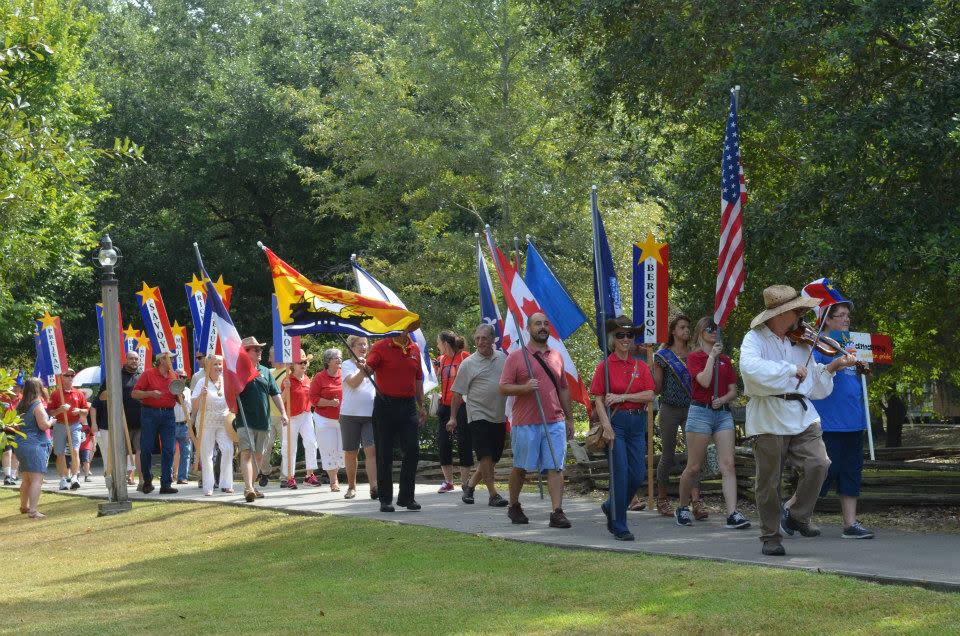
Cajuns are the descendants of Acadian exiles who resettled along the Gulf Coast, especially southwest Louisiana, beginning in the 1760s. Though the original number of Acadian settlers to Louisiana was small, relative to other groups, their impact on the state’s culture has been immense.
The roots of the Cajun people stretch back to west-central and northern France, where several waves of intrepid individuals and families began sailing across the Atlantic Ocean to colonize the northeastern region of French Canada. Based in what is now known as the Maritime Provinces — New Brunswick, Nova Scotia, and Prince Edward Island — the Acadians lived and assimilated, sometimes through marriage, among the Indigenous Mi’kmaq peoples. They survived as subsistence farmers and fur trappers.
After a series of wars with the British, the French crown permanently forfeited the Acadian colony to their cross-Atlantic rivals in 1710. Over the next five decades, the Acadians waged a bloody guerrilla campaign against the British, consistently refusing to sign an oath of allegiance to their Protestant, Anglophone sovereign.
Beginning in 1755, the British began forcibly exiling over 12,000 Acadians, while razing half that number of Acadian homes, in a decade-long expulsion campaign forever known as the Grand Dérangement — the Great Upheaval. Loaded onto ships, the Acadian refugees were dispersed across the British American colonies.
The first Acadians arrived at the port of New Orleans in 1764. Over the next two decades, three to four thousand others would join them to settle in Louisiana. They were granted land to live in the Attakapas region — spanning today’s St. Martin, St. Mary, Iberia, Lafayette, and Vermilion parishes — where the Bayou Teche watershed ran up against wide-ranging prairie land. There they farmed, raised cattle, fished, and hunted. They built homes, communities, and families. They lived, worked, and intermarried with their neighbors, people of French, Spanish, German, Indigenous, and African heritage. Together, they laid the culinary and musical groundwork for the twin cultures that would eventually make the term Cajun world-famous.
By the 1860s, the offspring of the Acadian exiles to Louisiana would be commonly known as Cajuns.
Over the next century, Cajuns were gradually, sometimes coercively, Americanized. School classrooms banned the speaking of French, harshly punishing students who dared use the language spoken at home. Many Cajuns became urbanized after moving to the booming hub city of Lafayette. Many more became Americanized after embracing the burgeoning popular cultures of postwar America.
The 1960s witnessed a Cajun renaissance. French language instruction returned to schools, due to the work of individuals and organizations, most notably CODOFIL — Council for the Development of French in Louisiana. Local culinary and music festivals, chefs, and artists began attracting attention well beyond their local confines. In 1977, the Lafayette Convention and Visitors Commission launched Festivals Acadiens — now Festivals Acadiens et Créoles — to spotlight the roots music, food, and arts cultures of Acadiana. The Cajun restaurant became a global phenomenon with the rise of Chef Paul Prudhomme. A sense of Cajun pride seized the region, perhaps most evident when the local university — then known as the University of Southwestern Louisiana, now the University of Louisiana at Lafayette — changed the name of its mascot from the Bulldogs to the Ragin' Cajuns.
Today, throughout Acadiana, it’s difficult to ignore Cajun culture. The Cajun French dialect is spoken in classrooms and on the airwaves. Cajun bands tour the world. Cajun recipes and products, authentic and bastardized, can be found in restaurants and on grocery shelves just about everywhere.
Numerous museums across Acadiana vividly portray the history and culture of the Cajun peoples, including the living history museum and folklife village Vermilionville in Lafayette, the Wetlands Acadian Cultural Center in Thibodaux, the Acadian Museum in Erath, the Cajun Music Hall of Fame & Museum in Eunice, and the Acadian Memorial in St. Martinville, where an eternal flame burns in memory of the exiles that came to Louisiana over 250 years ago.


Weekday & Off-Season Travel in Lafayette
Festival weekends and Mardi Gras may get much of the attention, but you don't need a major event on the calendar to experience Lafayette. In fact, visiting during the week or…

Bakeries in Lafayette
The people of Lafayette love themselves a good pastry. Or a petit four or king cake when in season. Acadiana‘s love for carbohydrates goes beyond just rice, and the bakeries…

Lafayette Weekly
A weekly curated playlist by local musician Philippe Billeaudeaux featuring music by Lafayette, LA musicians with a weekly rundown of live music happening in and around the area…

Wellness & Eco-Tourism Experiences in Lafayette
Wellness looks different for everyone. For some, it's an early morning paddle through quiet bayous. For others, it's a massage after a day of exploring, a guided…


